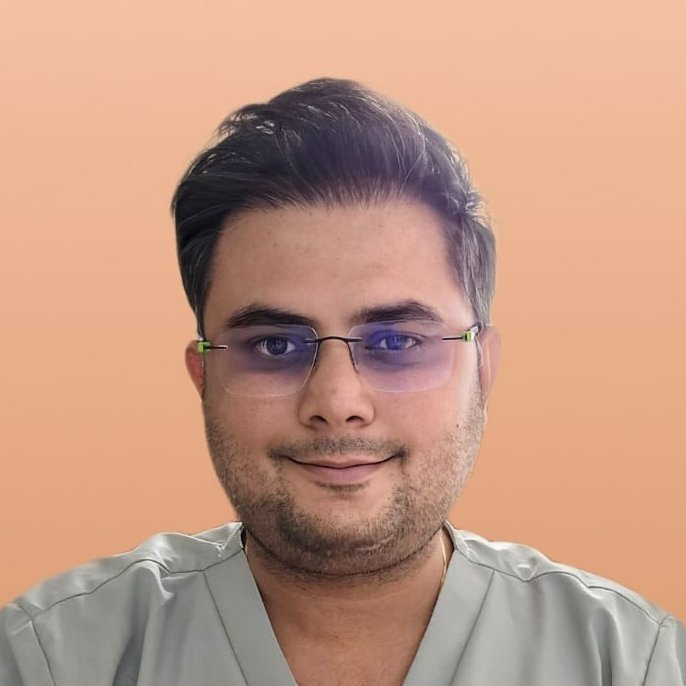

A quiet revolution in the dental chair
For most of its history, dentistry has been a discipline of careful visual inspection and clinical experience. A dentist looks, taps, measures, and decides. That hasn’t changed — but in 2026, an increasing number of those decisions are being supported by artificial intelligence trained on millions of dental records. The result is not a robot dentist, but a human dentist with a very attentive digital second opinion.
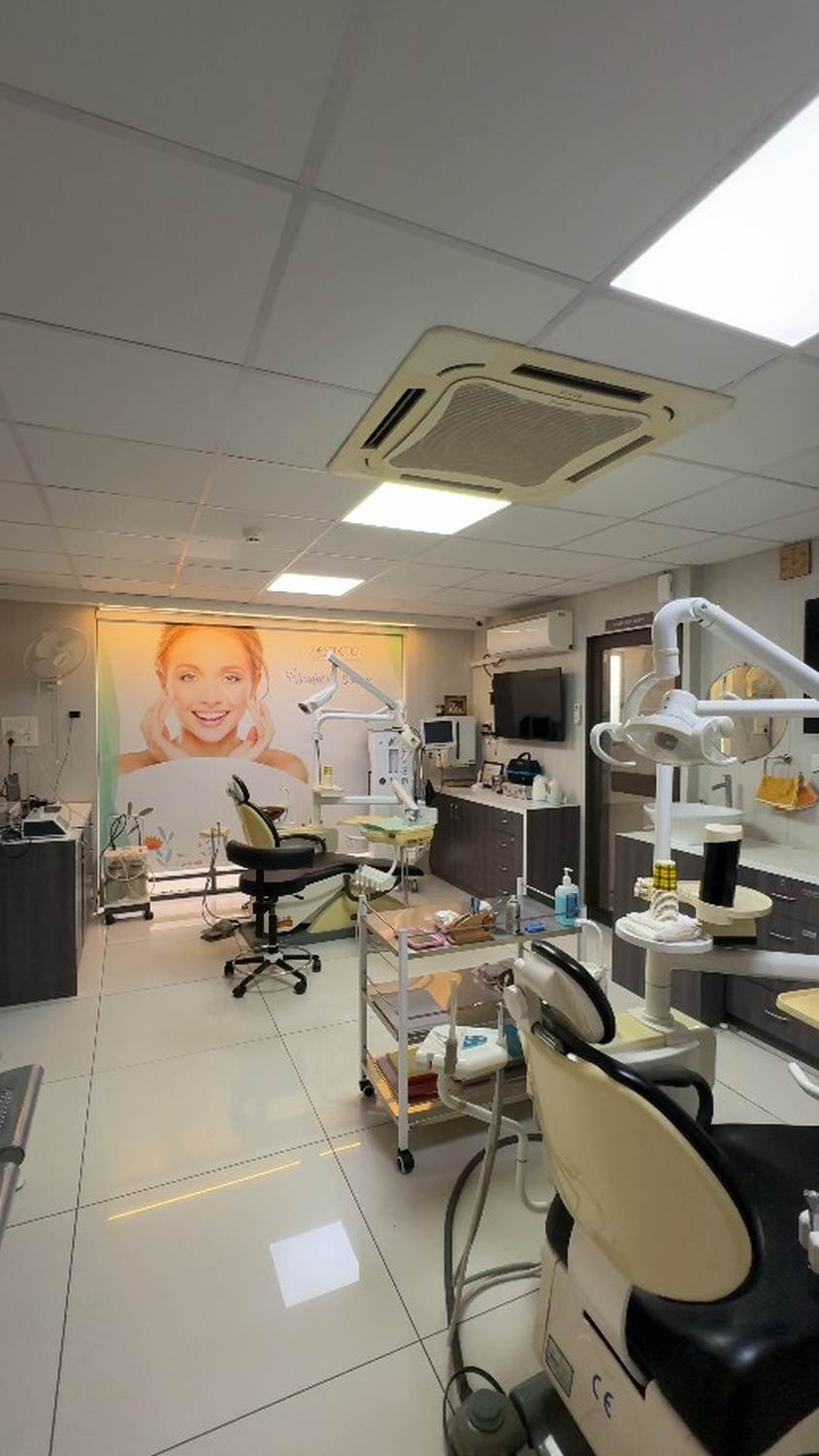
At Esthetica Dental in Vadodara, we’ve been integrating AI-assisted tools into our diagnostic workflow for the past two years. This article walks through what these tools actually do, what they get right, and — just as importantly — where human judgement remains irreplaceable.
1. Catching cavities before they hurt
The most mature application of AI in dentistry is caries (cavity) detection on bitewing X-rays. Modern neural networks trained on tens of thousands of labelled radiographs can now flag early enamel lesions that are easy for a human eye to miss, especially between teeth where decay hides in shadow.
Peer-reviewed studies published over the last two years have shown AI-assisted detection can improve proximal cavity identification by up to 30% compared to traditional visual interpretation alone. For patients, the practical benefit is obvious: smaller fillings, shorter appointments, and fewer root canals down the line.
“The AI doesn’t replace the dentist’s eye — it gives that eye a second chance. I still make the final call on every treatment, but I miss fewer things than I used to.”
2. Smarter implant planning with 3D CBCT scans
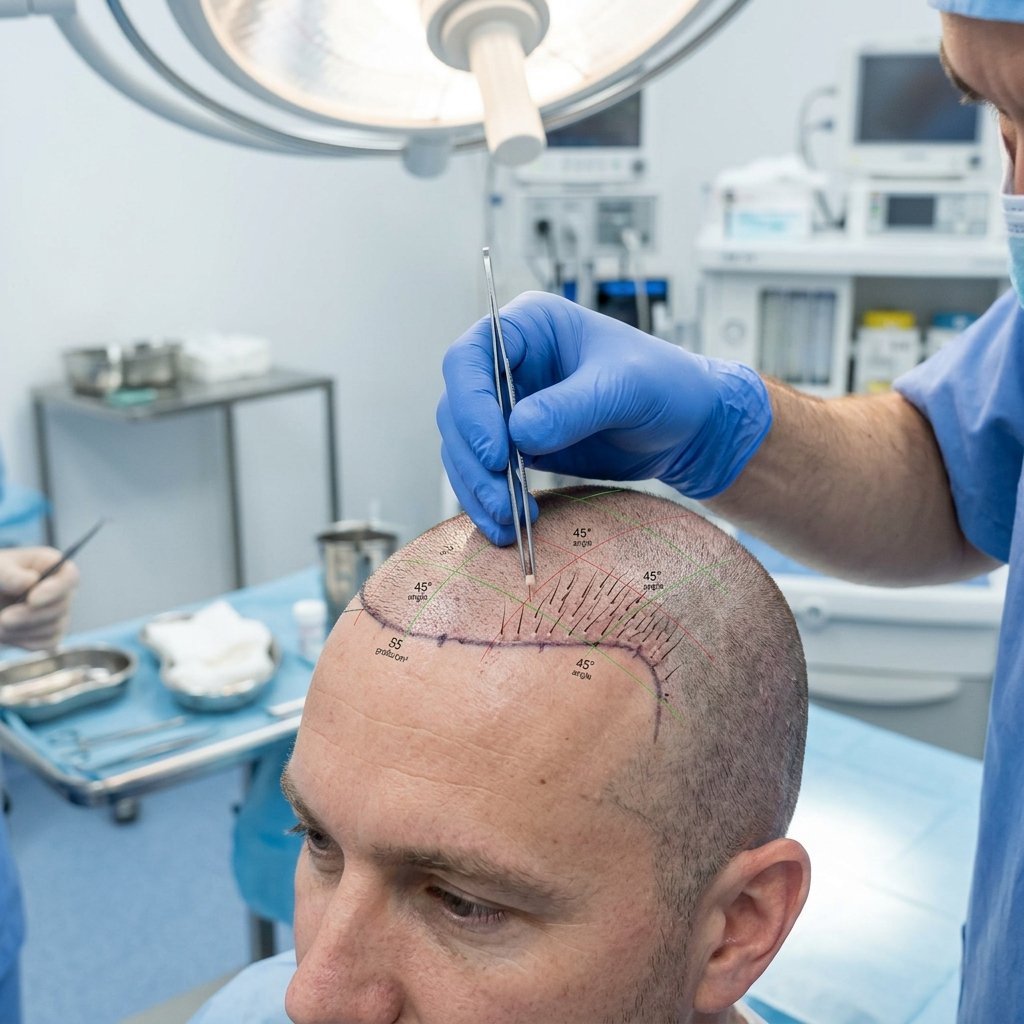
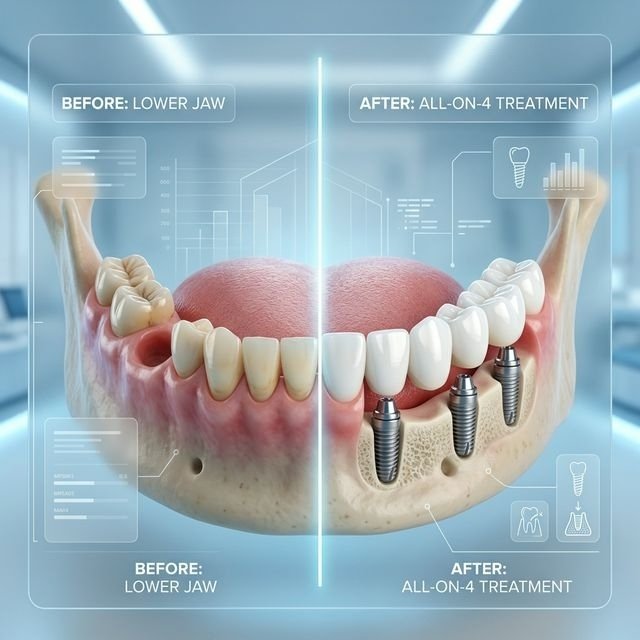
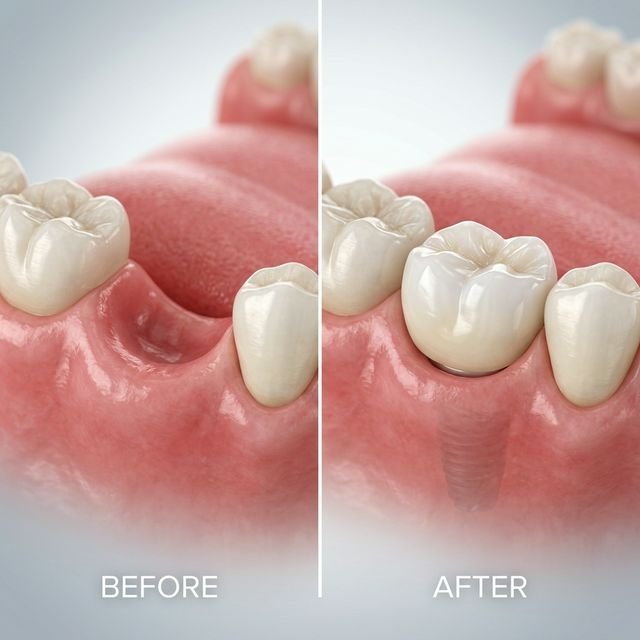
Dental implant placement used to depend almost entirely on the implantologist’s interpretation of 2D images plus a mental map of the patient’s anatomy. Today, AI-powered planning software ingests cone-beam CT (CBCT) scans and automatically:
- Segments each tooth, bone structure, and the inferior alveolar nerve
- Suggests optimal implant angulation based on available bone volume
- Flags proximity to vital structures like the sinus floor or nerve canal
- Helps generate guided-surgery stents so the drill path is pre-determined
For patients, this translates to shorter surgical times, less post-operative discomfort, and measurably higher long-term success rates.
3. AI-powered smile design
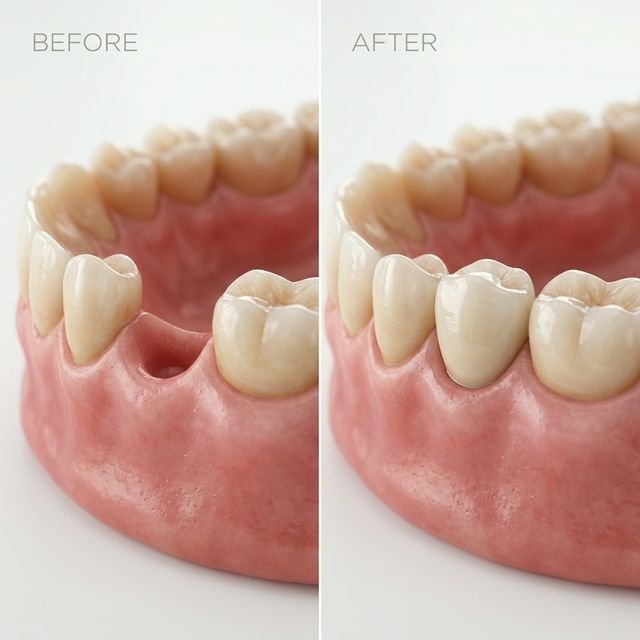
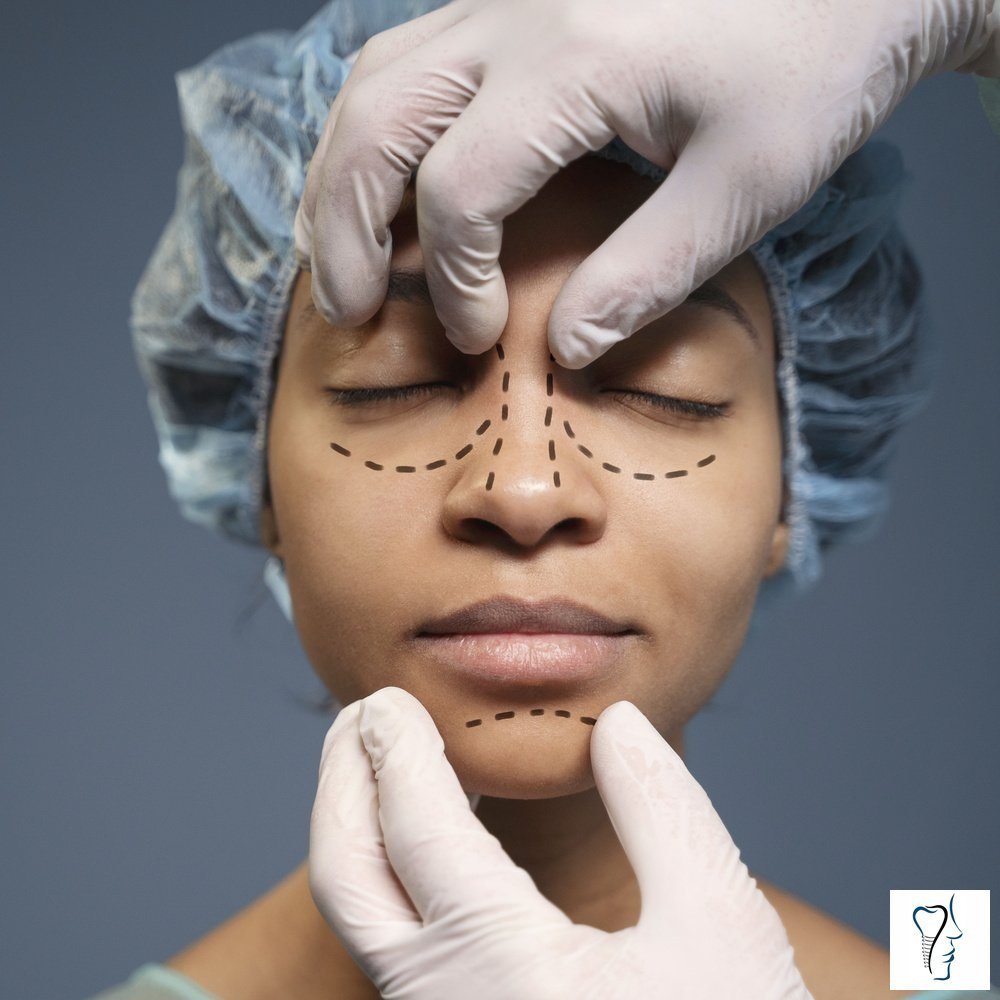
Cosmetic dentistry has benefitted enormously from AI. Modern smile-design platforms use facial recognition and anatomical landmark detection to propose tooth proportions that match each patient’s face shape, lip curvature, and smile line. What used to be a subjective conversation between dentist and patient is now backed by measurable data — and, crucially, a photorealistic preview of the expected outcome before any drilling begins.
What patients see versus what’s happening behind the scenes
From the patient’s chair, the experience feels like this: a few photos and a 3D intraoral scan, followed by a digital mock-up you can approve or tweak. In the background, the software is running generative models to shape each tooth against thousands of aesthetic benchmarks from healthy, natural smiles.
Key Takeaway
AI-assisted smile design doesn’t just speed up the planning phase — it dramatically reduces the “second attempt” rate, because both patient and dentist are aligned on the final outcome before any irreversible work begins.
4. Where AI still falls short
It would be dishonest to suggest AI is a silver bullet. Current systems still struggle with:
- Unusual anatomy — rare variations not well-represented in training data can lead to false negatives
- Soft-tissue assessment — clinical signs like gum inflammation still require a dentist’s hands
- Patient context — AI can’t ask about grinding habits, stress, or medication side-effects
This is why, at Esthetica, every AI-flagged finding is reviewed by the treating dentist before it appears in your treatment plan.
What this means for you as a patient
When choosing a dentist in 2026, it’s worth asking whether they use AI-assisted diagnostics — not because the technology is magical, but because clinics that have adopted it tend to also invest in modern CBCT imaging, intraoral scanners, and digital record-keeping. Together, these raise the floor of care in a way that’s hard to see on a price sheet but very noticeable in outcomes.
If you’re in Vadodara or travelling to Gujarat for treatment, you’re welcome to book a complimentary consultation to see how these tools work on your own case. The diagnosis is always yours to keep, whether or not you proceed with us.
Key Takeaways
- AI-assisted caries detection can catch early cavities up to 30% more accurately than visual inspection alone.
- CBCT + AI implant planning shortens surgery time and improves long-term success rates.
- Digital smile design lets you preview the outcome before any irreversible work begins.
- AI supports, but does not replace, the clinical judgement of an experienced dentist.