
 Home
Home About us
 Dental
 Hair
Hair
 Face
Face

Missing teeth can be more than just a cosmetic concern; they can impact your ability to speak clearly, enjoy your favorite foods, and maintain the structural integrity of your jaw. While dentures and bridges have been the standard for decades, dental implants have emerged as the gold standard for tooth replacement.
This guide explores everything you need to know about dental implants, from the procedure itself to the long-term benefits they offer.
What Exactly is a Dental Implant?
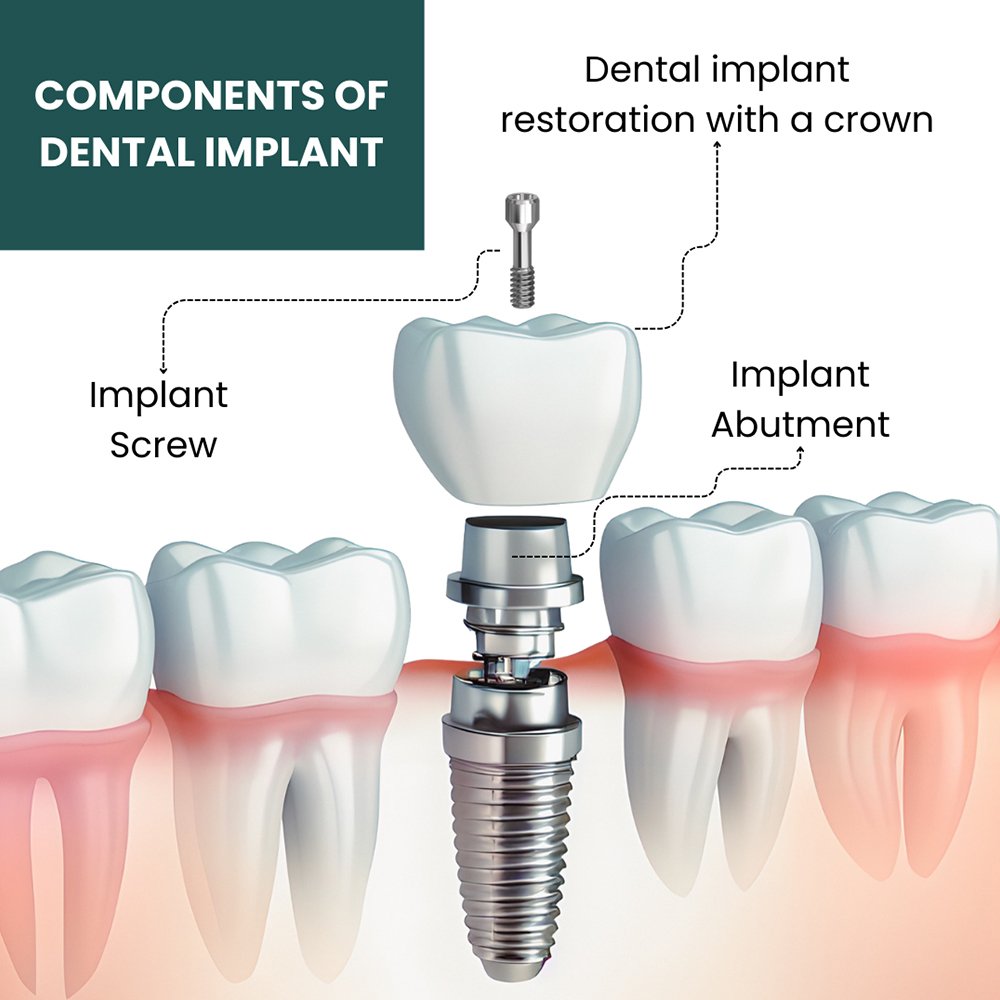
Think of a dental implant as a high-tech replacement for a tooth root. It is a small, screw-like post—usually made of biocompatible titanium—that is surgically placed into the jawbone.
Once the implant is in place, a process called osseointegration occurs. This is where the bone actually grows around the implant, fusing it to your jaw. This creates a rock-solid foundation for a custom-made crown that looks, feels, and functions just like a natural tooth.
Why Choose Implants Over Other Options?
While bridges and dentures are effective, they don’t offer the same level of permanence or health benefits as implants.
- Jawbone Preservation: When you lose a tooth, the underlying bone begins to deteriorate because it’s no longer being stimulated. Implants are the only restoration option that preserves and stimulates natural bone.
- Durability: With proper care, dental implants can last a lifetime. Bridges, by contrast, often need replacement every 5 to 10 years.
- Stability: Because they are fused to the bone, implants don’t slip or click. You can eat crunchy or sticky foods without worrying about your “teeth” moving.
- Protection of Adjacent Teeth: A dental bridge requires grinding down the healthy neighboring teeth to support the structure. Implants stand alone, leaving your natural teeth intact.
The Step-by-Step Journey
Getting a dental implant is a multi-step process designed to ensure the best possible fit and longevity.
1. The Initial Consultation
Every successful implant begins with a thorough exam. Your dentist will take 3D scans or X-rays to assess your bone density and determine the precise placement of the implant. If you have significant bone loss, a bone graft might be recommended first to strengthen the site.
2. Placing the Implant
During a minor surgical procedure, the titanium post is inserted into the jawbone. While “surgery” sounds daunting, most patients report that the discomfort is minimal—often less than a tooth extraction—and can be managed with local anesthesia or sedation.
3. The Healing Phase (Osseointegration)
This is the most critical stage. Over the next 3 to 6 months, the implant heals and integrates with the bone. During this time, you may wear a temporary crown or bridge so you are never without a smile.
4. The Abutment and Crown
Once healing is complete, a small connector piece called an abutment is attached to the implant. Finally, a custom-crafted porcelain crown is placed on top. The color and shape are matched perfectly to your surrounding teeth for a seamless look.
Is Everyone a Candidate for Implants?
Most adults in good general health are excellent candidates for dental implants. The primary requirements are:
- Healthy Gums: Free from periodontal disease.
- Adequate Bone Density: To support the implant post.
- Good Oral Hygiene: A commitment to brushing and flossing regularly.
Conditions like uncontrolled diabetes or heavy smoking can slow the healing process, but they don’t necessarily disqualify you. A consultation with an implant specialist is the best way to determine your eligibility.
Caring for Your New Smile
Maintaining a dental implant is remarkably easy because you treat it just like a natural tooth.
- Brush and Floss: Use a soft-bristled toothbrush and non-abrasive toothpaste. Flossing around the implant is essential to keep the surrounding gum tissue healthy.
- Regular Checkups: Visit your dentist every six months. They will use specialized tools to clean the implant and ensure the “root” remains secure.
- Avoid “Ice Crunching”: While implants are incredibly strong, they aren’t indestructible. Avoid chewing on ice, hard candy, or using your teeth as tools to open packaging.
Investment in Your Future
There is no denying that dental implants have a higher upfront cost than other methods. However, when you factor in the longevity, the lack of future replacement costs, and the priceless benefit of preserving your jawbone, they are often the most cost-effective long-term solution.
Conclusion
Dental implants are more than just a dental procedure; they are an investment in your quality of life. Whether you are missing a single tooth or an entire arch, implants provide the closest thing to a “reset button” for your oral health.
